
January Tax Deadlines and Key Dates: What Business Owners & Entrepreneurs Need to Know for Tax Season

January is here, and most business owners are scrambling to figure out what's due when. While your competitors are still playing catch-up with year-end compliance, smart entrepreneurs are already positioning themselves for a strategic tax season that maximizes deductions and minimizes stress.
Here's the reality: Missing January deadlines doesn't just cost you penalties: it sets the tone for your entire 2026 tax strategy. Get this month right, and you're ahead of 90% of business owners who treat tax season like a last-minute crisis instead of a wealth-building opportunity.
Your January 2026 Tax Calendar (The Dates That Actually Matter)
January 15, 2026 - The first critical deadline hits in just 9 days:
Fourth quarter 2025 estimated tax payments due (self-employed, farmers, fishermen)
Monthly employment tax deposits for December 2025 payroll
February 2, 2026 - Originally January 31, but moved due to weekend:
W-2s must be delivered to all employees
1099-NEC and 1099-MISC forms due to contractors
Copy B of Form 3921 due to employees (ISO exercises)
The window for strategic moves is closing fast. Let's break down exactly what you need to handle and how to turn compliance into competitive advantage.

January 15: Your First Test of 2026 Tax Strategy
Estimated Tax Payments - The Self-Employed Deadline
If you're self-employed, a farmer, or fisherman, January 15 is your final chance to make fourth quarter 2025 estimated tax payments without penalty exposure. This isn't just about compliance: it's about cash flow optimization.
The Strategic Play: Instead of scrambling to make the payment, use this deadline as a planning opportunity. Calculate whether you're better off making the estimated payment or filing your 2025 return early and paying the full balance by March 2, 2026.
Pro Tip: If your 2025 income was significantly lower than expected, you might avoid the estimated payment entirely by filing early. But if 2025 was a strong year, make the payment and use the extra time to implement advanced deduction strategies.
Employment Tax Deposits - The Payroll Reality Check
Employers following monthly deposit rules must deposit Social Security, Medicare, and withheld income tax for December 2025 by January 15. This applies to most businesses with regular payroll obligations.
The Compliance Note: Employment tax deposits must be made electronically through the Electronic Federal Tax Payment System (EFTPS) unless your quarterly deposit liability is under $2,500. Small businesses under this threshold can pay quarterly with their returns, but monthly depositors don't have this flexibility.
Strategic Consideration: If you're consistently hitting monthly deposit requirements, this is a signal that your payroll tax strategy needs attention. Consider whether your current payroll structure is optimized for both compliance and tax efficiency.
February 2: The Information Reporting Crunch
Originally scheduled for January 31, these deadlines moved to Monday, February 2, 2026, because January 31 falls on a Saturday. Don't let the weekend shift catch you off guard: preparation time is shrinking.
W-2 Distribution - Employee Communications
Every employee who worked for you in 2025 must receive their W-2 by February 2. This includes terminated employees, part-time workers, and anyone who received wages during the year.
The Strategic Angle: Use W-2 distribution as a touchpoint with your team. Include a brief note about any changes to benefits, retirement contributions, or other compensation elements that might affect their personal tax planning.
Compliance Warning: W-2s must be delivered personally, by mail, or electronically (with employee consent). Email delivery requires specific employee authorization: verbal consent isn't sufficient.

1099 Reporting - The Contractor Connection
1099-NEC forms are due to all contractors who received $600 or more in 2025. This includes freelancers, consultants, and independent contractors who provided services to your business.
The Strategic Move: Don't just send forms: use this as relationship management. A brief note thanking contractors for their work and outlining any changes to your contractor management process builds goodwill and positions you as a professional operation.
Critical Detail: The $600 threshold applies per contractor, not per project. If you paid someone $300 in March and $400 in September, you need to issue a 1099-NEC.
Form 3921 - The ISO Compliance Requirement
If your company issued incentive stock options (ISOs), Copy B of Form 3921 must be delivered to employees by February 2. This often-overlooked requirement applies to any employee who exercised ISOs during 2025.
Strategic Note: ISO reporting connects to complex tax planning opportunities for your employees. Consider providing basic educational resources about ISO tax implications: it demonstrates sophisticated benefits management and helps retain key talent.
State-Level Considerations - The Hidden Complications
State tax deadlines don't always align with federal requirements. Most states follow federal timing, but several have unique requirements that can catch unprepared businesses:
California: Requires additional reporting for certain contractor payments and has specific electronic filing thresholds.
New York: Has accelerated due dates for certain business tax deposits and unique requirements for out-of-state contractors.
Texas: No personal income tax, but businesses must handle sales tax reporting and franchise tax considerations.
The Strategic Approach: Don't assume state compliance mirrors federal requirements. Multi-state operations need jurisdiction-specific deadline tracking to avoid penalties that can compound quickly.
2026 Season Updates - What's Changed
The IRS has implemented several changes affecting 2026 tax season compliance:
Electronic Filing Thresholds: More businesses are required to file information returns electronically. If you filed 10 or more information returns of any type in 2025, electronic filing is mandatory for 2026.
Corporate Transparency Act: Beneficial ownership reporting requirements are now in effect for most business entities. While not directly related to tax filing, non-compliance creates audit risk that affects your overall tax strategy.
Section 174 R&D Changes: The mandatory capitalization of research and development costs continues to affect software companies, startups, and businesses with significant development expenses.

Strategic Scenarios - How Smart Business Owners Handle January
Scenario 1: The Cash Flow Optimizer
Service business with irregular income: Instead of making estimated payments based on last year's earnings, they calculated 2025 actual income early and determined they could skip the January 15 payment by filing their return by March 2. This freed up $15,000 in working capital during their slow season.
Scenario 2: The Compliance Streamliner
Manufacturing company with 25 employees: They automated W-2 distribution through their payroll provider and included personalized notes about the company's new HSA matching program. This turned a compliance requirement into employee engagement opportunity.
Scenario 3: The Multi-State Strategist
Consulting firm with clients in 8 states: They discovered their contractor payments triggered reporting requirements in 3 states with different deadlines. By centralizing state compliance tracking, they avoided $2,400 in penalties and positioned themselves for cleaner 2026 operations.
The Penalty Reality - What Happens When You Miss Deadlines
Late estimated tax payments: Penalty rates vary based on underpayment amounts and timing, but typically range from 3-8% annually. For businesses with significant quarterly obligations, this adds up fast.
Late W-2 distribution: $50 per form if corrected within 30 days, escalating to $270 per form for longer delays. With multiple employees, penalties compound quickly.
Missing 1099 deadlines: Similar penalty structure as W-2s, but with additional complications if contractors use missing forms as excuse for their own filing delays.
The Strategic Reality: Penalties aren't just financial costs: they signal poor operational control to the IRS and increase audit risk across all your business activities.
Your January Action Plan
This week (by January 10):
Verify estimated tax payment requirements for 2025
Confirm employment tax deposit calculations for December
Review contractor payment records for 1099 requirements
Next week (by January 15):
Submit estimated tax payments if required
Process employment tax deposits
Finalize W-2 and 1099 preparation
Final week of January:
Distribute W-2s to employees
Send 1099s to contractors
File copies with appropriate agencies
February 1:
Confirm all forms were received by recipients
Address any distribution issues immediately
Beyond Compliance - Setting Up Strategic Success
January deadlines aren't just about avoiding penalties: they're about positioning your business for a strategic tax season. When you handle these requirements efficiently, you create bandwidth for the advanced planning that separates successful entrepreneurs from those who simply survive tax season.
The businesses that thrive understand this: Tax compliance is the foundation, but wealth building happens in the strategic moves you make with the time and clarity that good compliance creates.
Most business owners are still figuring out what's due when. You're not. You're using January deadlines as the first step in a tax strategy that maximizes deductions, optimizes cash flow, and positions your business for sustained growth.
Ready to move beyond basic compliance and into strategic tax optimization? Contact Ledgerly for a consultation that turns your tax obligations into wealth-building opportunities. We specialize in helping entrepreneurs and service business owners navigate complex compliance requirements while implementing advanced strategies that create lasting financial advantage.
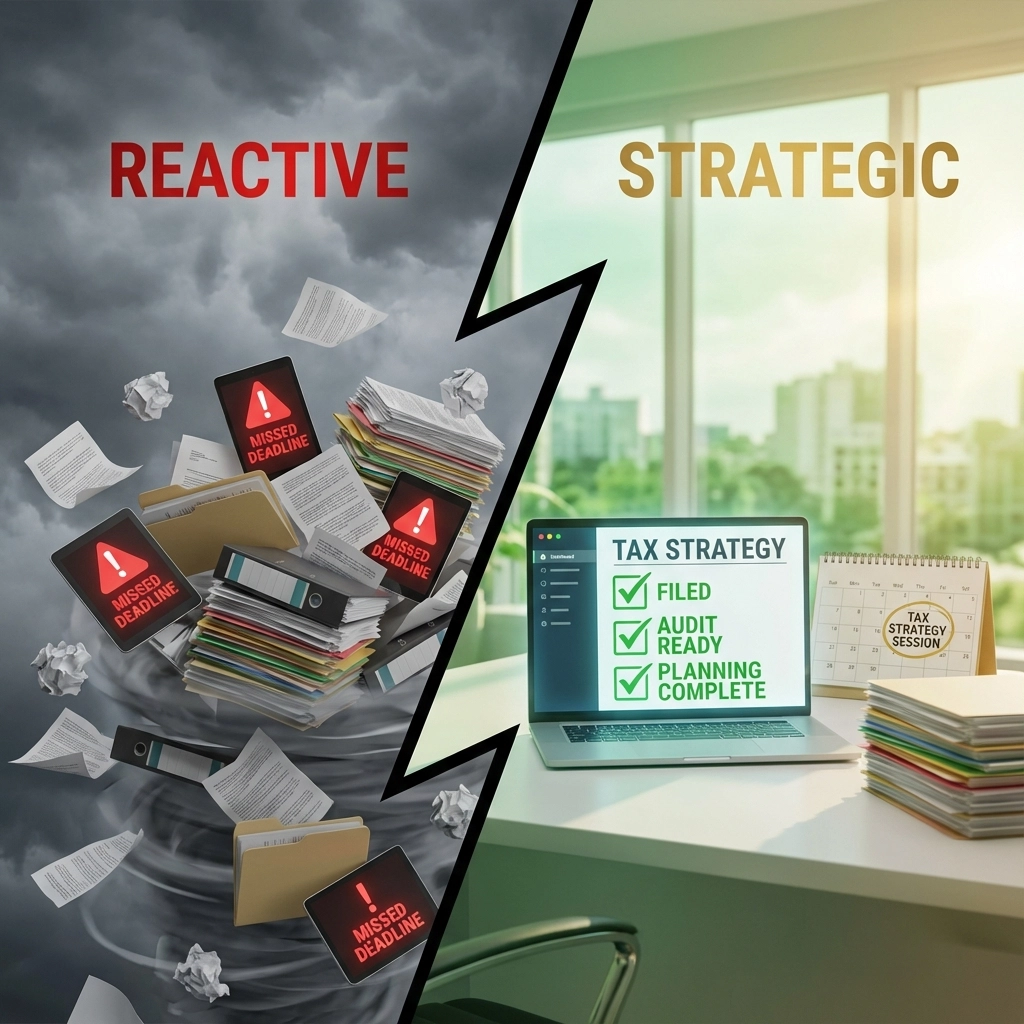
Don't let January deadlines set the tone for another reactive tax season. Take control now, and make 2026 the year your tax strategy becomes your competitive edge.
Comments